The 25-Minute "Quick" Stand-Up
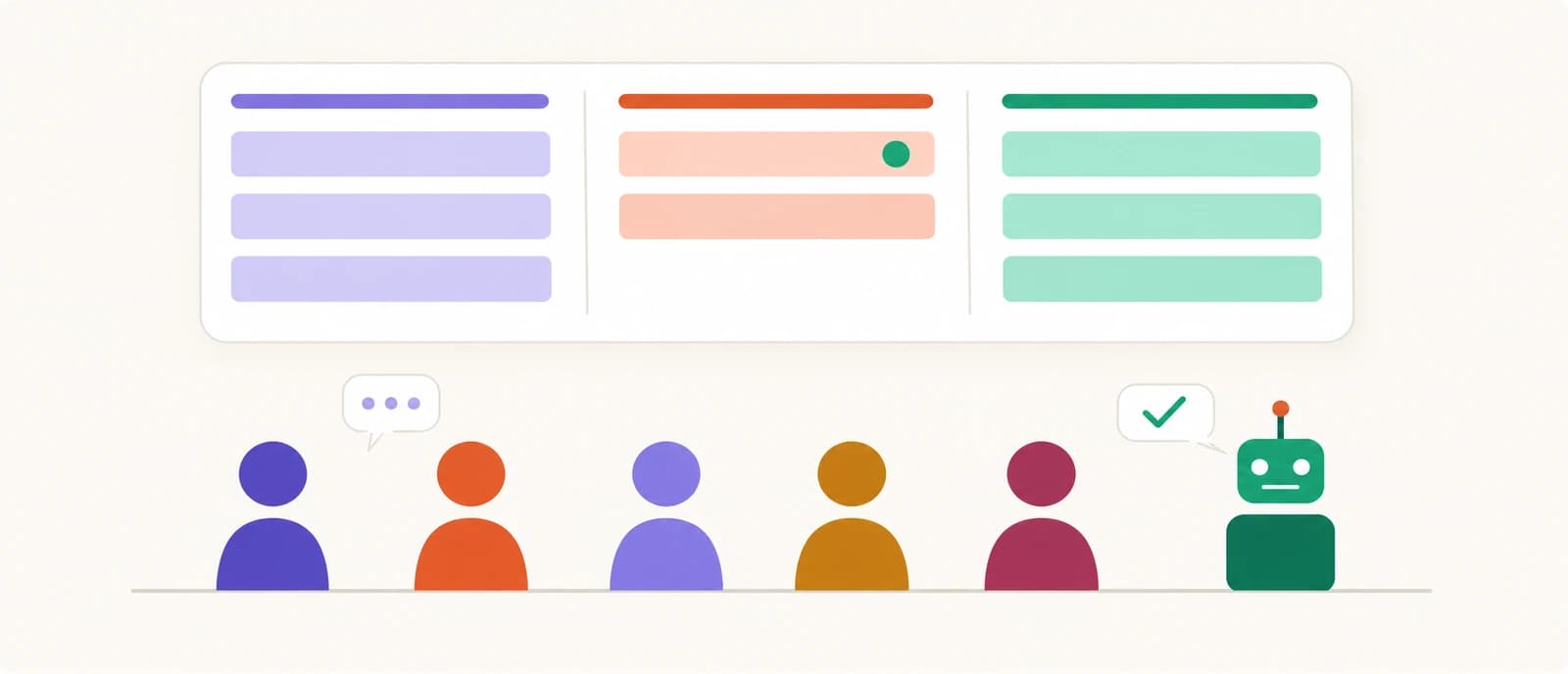
It's 9:15 a.m. The daily stand-up was supposed to take 15 minutes. It's now minute 25. Someone is explaining a bug in painful detail, two people have quietly checked out, and the one blocker that actually mattered was mentioned at minute 4 and never written down.
By lunch, nobody remembers what was decided. By Friday, the blocker has quietly turned into a missed deadline.
Sound familiar? Every Agile team has lived this scene. And it raises a question that is lighting up LinkedIn threads and engineering Slack channels everywhere: If AI can take notes, track tasks, and spot problems faster than any of us, is it the new Scrum Master?
What a Scrum Master Actually Does
First, let's be fair to the role. A Scrum Master is not a meeting scheduler with a fancy title. At their best, they are three things at once:
- A facilitator who keeps ceremonies focused, useful, and short.
- A blocker-remover who clears the path so developers can actually build.
- A coach who helps the team grow, communicate, and improve sprint after sprint.
Notice the pattern? Some of this is a process. A lot of it is people. Keep that in mind, because it's exactly where the AI story gets interesting.
Where AI Is Already Crushing It
Let's give the machines their due. In several areas, AI is already better than a tired human at 4:45 p.m. on a Friday.
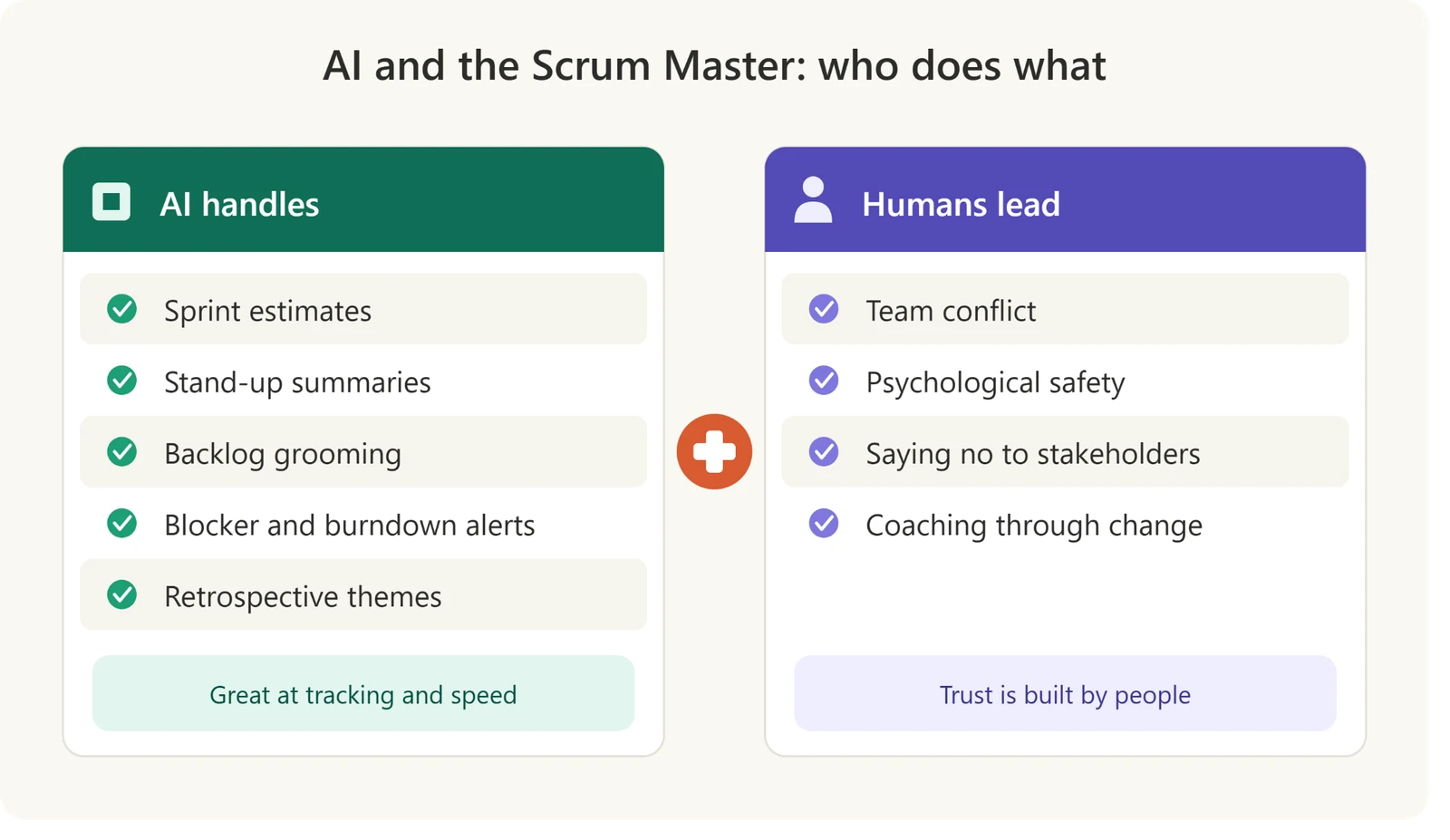
Sprint planning estimates. AI can analyze past sprints, compare similar tickets, and suggest story points based on how long comparable work really took, not how long we optimistically hoped it would. Fewer overcommitted sprints, fewer awkward apologies.
Stand-up summaries. Imagine every stand-up automatically turned into a clean recap: what's done, what's in progress, what's blocked. No note-taker required, and no "wait, what did we decide?" on Thursday.
Backlog grooming. Duplicate tickets, vague user stories, missing acceptance criteria? AI can flag them, suggest rewrites, and even group related items. The backlog stops being a junk drawer.
Blocker and burndown alerts. This is where AI really shines. By watching ticket movement, code reviews, and team workload, it can warn you that a sprint is drifting off course before the burndown chart turns red. Think smoke detector, not a fire department.
Retrospective insights. After a few months of retros, patterns hide in plain sight. AI can scan feedback and surface themes like "unclear requirements" or "too many mid-sprint changes" that humans might overlook or avoid mentioning.
In short, AI is excellent at the what: what's late, what's stuck, what keeps repeating.
Where AI Falls Flat
Here's the catch.AI is less capable of understanding the underlying reasons behind problems and the people involved
Team conflict. When two developers are silently annoyed at each other, no dashboard will show it. A good Scrum Master notices the tension in how someone says "fine, I'll do it." AI doesn't hear tone, and it doesn't read a room.
Psychological safety. The best teams are ones where people can say "I messed up" or "I don't understand this" without fear. That trust is built through human moments: a private check-in, a calm reaction to bad news, a joke at the right time. You can't automate trust.
Saying "no" to stakeholders. When a senior executive wants three new features squeezed into the current sprint, someone has to push back with tact, backbone, and business awareness. An algorithm can calculate the impact. It can't walk into that room and hold the line.
Coaching through change. Moving to a new tool, a new process, or a new way of working makes people anxious. Guiding them through it takes empathy, patience, and credibility earned over time.
AI can tell you the team is struggling. It takes a human to ask, "Hey, are you okay?
The Verdict: Not Replaced, but Upgraded
So, is AI the new Scrum Master? No. But it might be the best assistant a Scrum Master has ever had.
Think of AI as a co-pilot. It handles the checklists, the monitoring, and the paperwork, the parts of the job that drain energy and eat hours. That frees the Scrum Master to do what only humans can: listen, coach, negotiate, and build a team people actually want to be part of.
he Scrum Masters at risk are not those who embrace AI, but those whose value lies mainly in administration. The ones who thrive will be Scrum Masters who adopt AI and combine technological skills with leadership skills, using automation to handle routine tracking and reporting so they can focus on coaching, facilitation, and guiding their teams.
The future of Agile isn't human versus machine. It's human plus machine, and the teams that figure that out first will have a serious edge.